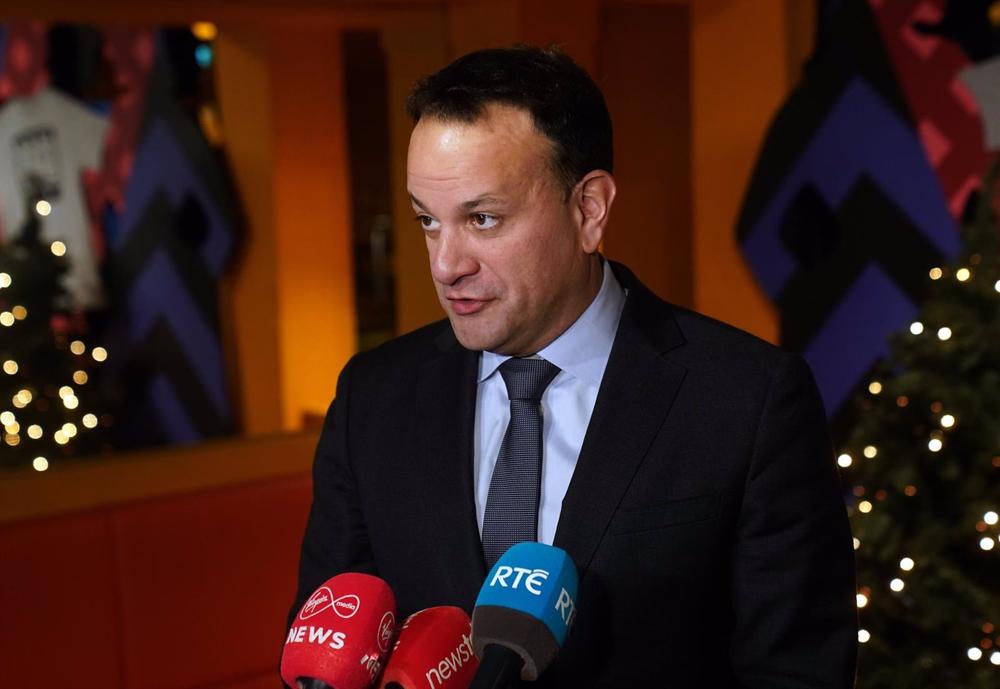
The Prime Minister of Ireland, Leo Varadkar, has stated that all parties «have made mistakes» in the management of Brexit and has opened himself to concessions in relation to the protocol established for Northern Ireland, as «perhaps» it is «too strict».
Varadkar, criticized in certain unionist sectors for his responsibility in the Brexit negotiations – at the time he was also Prime Minister – nevertheless empathizes with those in Northern Ireland who may see their integration into the United Kingdom threatened by the protocol.
This protocol was established so that Northern Ireland could remain within the European common market, at the cost of establishing controls on trade with the rest of the British territories. The UK government has threatened to challenge the agreements if there are no new concessions from the EU.
«I am sure that we all made mistakes in the management of Brexit,» Varadkar said, reflecting on a process for which «there was no roadmap», given that never before had a country decided to leave the European Union, according to the RTE channel.
The Prime Minister, who took the baton again in December after a first stage of the legislature dominated by Micheál Martin, coalition partner, wants to travel early this year to Northern Ireland to meet with all parties and tries to «find a solution».
He considers that «there is room for flexibility and for changes», in a position he says he shares with the president of the European Commission, Ursula Von der Leyen, and with the chief negotiator of this Executive, Maros Sefcovic. «I understand that there are two sides to this story,» Varadkar pointed out.
London and Brussels reactivated dialogue at the highest level in mid-December to resolve the outstanding disputes, after initial contacts with the Rishi Sunak government that Von der Leyen described as «encouraging».
The UK central government and unionist parties have criticized the consequences of the Northern Ireland protocol, as they consider the limits imposed on internal trade in exchange for Northern Ireland remaining in the Common Market to be excessive.
The EU, for its part, defends that these are the same provisions that were «negotiated, agreed and ratified» also by the British when the terms of the divorce were agreed and warns that their non-compliance means violating an international Treaty. Brussels, in fact, denounced the United Kingdom before the Court of Justice of the European Union for this.
Source: (EUROPA PRESS)