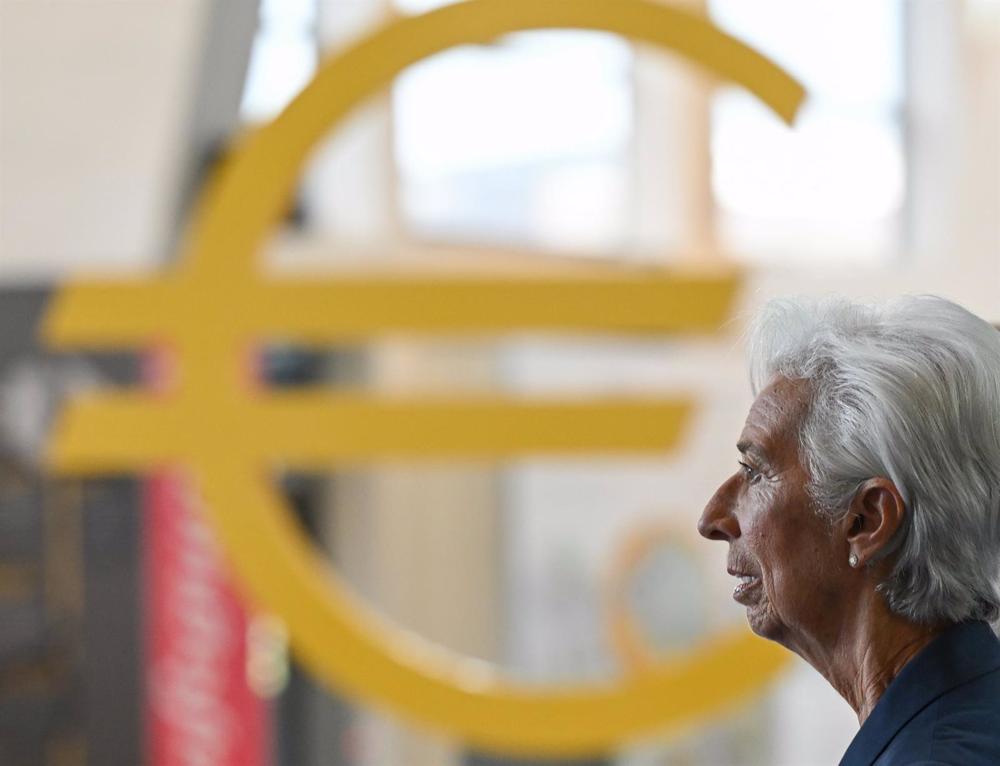
The Governing Council of the European Central Bank (ECB) has decided to raise interest rates by 50 basis points, so that the reference rate for its refinancing operations will stand at 2.50%, while the deposit rate will reach 2% and the lending rate 2.75%, anticipating further «significant» increases in the coming meetings.
«The Governing Council has decided today to raise all three key ECB interest rates by 50 basis points and, on the basis of the considerable upward revision of the inflation outlook, plans to raise them further,» the bank announced in a statement.
With this fourth consecutive increase in the price of money, which has reached its highest level since December 2008, the ECB has moderated the intensity of the normalization of its monetary policy, after the two increases of 75 basis points at the October and September meetings, following an initial increase of half a percentage point in July.
In particular, the Governing Council considers that interest rates «will still need to be raised significantly at a sustained pace» to sufficiently restrictive levels to ensure that they return in a timely manner to the 2% medium-term objective.
According to the institution, over time, keeping interest rates at restrictive levels will reduce inflation, dampening demand, and will also protect against the risk of a persistent upward shift in inflation expectations.
In any case, the ECB has stressed that the Governing Council’s future monetary policy decisions will continue to be data-dependent and will follow a data-driven approach at each meeting.
At the press conference following the Governing Council meeting, ECB President Christine Lagarde explained that the combined reading of the two features of the upcoming hikes (significant and at a sustained pace) means that, based on the data available at the moment, one should expect to raise rates «at a pace of 50 basis points over a period of time».
In this sense, he has justified the rate hike and the intention to «raise rates significantly further» because inflation is still too high and is expected to remain above the 2% target for too long.
Thus, the Frenchwoman pointed out that the risks to the eurozone’s growth outlook are tilted to the downside, especially in the short term, while the risks to the inflation outlook are mainly on the upside.
REDUCTION IN THE DEBT PORTFOLIO.
On the other hand, the ECB has confirmed that, as of early March 2023, the size of the APP portfolio will decline at a measured and predictable pace, as the Eurosystem will not fully reinvest the principal of maturing securities.
In this regard, he noted that the decline will average €15 billion per month until the end of the second quarter of 2023 and thereafter its pace will be determined at a later date.
As regards the PEPP, the emergency purchase plan launched during the pandemic, the Governing Council plans to reinvest the principal of maturing securities purchased under the program until at least the end of 2024.
In any case, it has indicated that the future wind-down of the PEPP portfolio will be managed in such a way as to avoid interference with the appropriate monetary policy stance.
In doing so, he stressed that the Governing Council «will continue to act flexibly in the reinvestment of the principal of maturing PEPP portfolio securities,» with the aim of countering pandemic-related risks to the monetary policy transmission mechanism.
OTHER CENTRAL BANKS.
The ECB’s decision to raise interest rates by 50 basis points comes days after it was reported that the eurozone’s year-on-year inflation rate stood at 10% in November, six tenths of a percentage point below the all-time high recorded in October and its first slowdown in 17 months.
The ECB’s less aggressive stance is in line with that of other major central banks, such as the US Federal Reserve and the Bank of England, which announced lower rate hikes at their respective December monetary policy meetings.
Specifically, the Federal Open Market Committee (FOMC) of the US Federal Reserve (Fed) decided yesterday to unanimously approve a 50 basis point increase in the country’s interest rates, to a target range of between 4.25% and 4.5%, moderating the rate hike from the 75 basis points of the previous decision.
In this way, the price of money in the United States reaches the highest levels since December 2007, a few months before the crisis of that year was triggered by the bankruptcies of Bear Sterns and Lehman Brothers. With Wednesday’s increase, the Fed has raised rates seven times out of the eight times it has met during 2022.
Meanwhile, the Bank of England’s Monetary Policy Committee decided on Thursday to raise the benchmark interest rate for its operations by 50 basis points to 3.50%, its highest level since the fall of 2008, after the 75 basis point increase at its previous meeting.